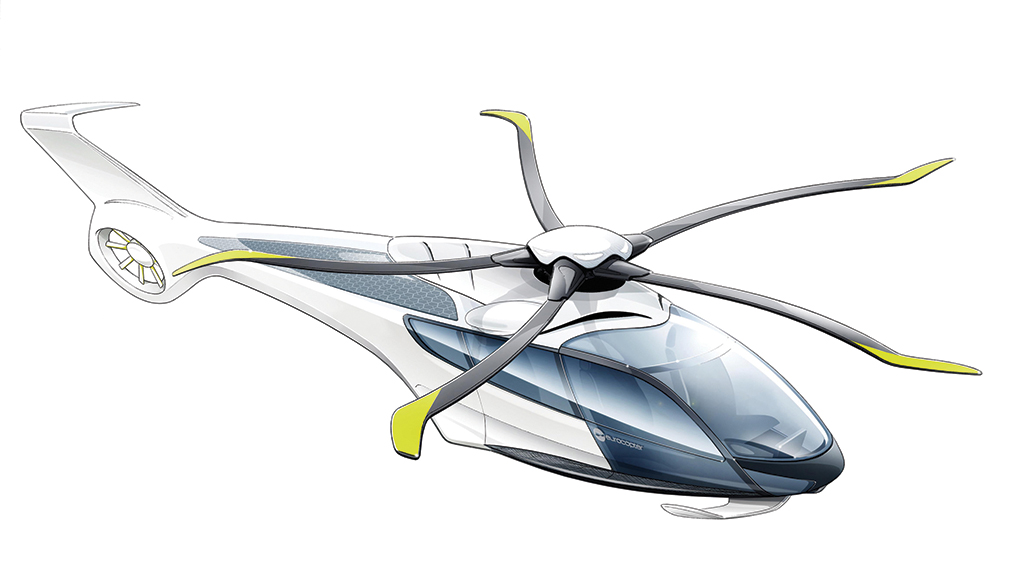
Airbus is urging Japan to base its next army utility helicopter on the X4, an advanced rotorcraft that the European manufacturer is developing for the civil market.
If the offer is accepted, the army UH-X program could be a breakthrough in Japan’s process of entering into the global arms market, since the military X4 would become a partly Japanese product offered for international sale.
Because Japan is now willing to consider arms exports,
Airbus Helicopters and longtime partner Kawasaki Heavy Industries (KHI) do not have to consider the old, inefficient Japanese industrial practice of complete or near-complete license production of foreign aircraft at extremely slow rates. Instead, they have discussed the possibility of the Japanese company building the drive train and rotor for all X4s, says an industry official who is closely watching progress in the program.Joint production would fulfill the Japanese defense ministry’s hopes that the army UH-X would support a civil export program. Conceivably, KHI could also do final assembly of X4s for the Asian civil market, especially since the company would probably need an assembly line for those delivered to the Japanese army.
The ministry intends to order about 150 army UH-X helicopters over 20 years. An unrelated Japanese navy helicopter program is also called UH-X.
A team comprising Bell and Fuji Heavy Industries (FHI) appears to be the other main contender for UH-X, probably offering a version of the Bell UH-1, such as the 412 or
UH-1Y Viper. Sikorsky says its S-76D would suit the requirement, but industry officials say its only possible Japanese partner, Mitsubishi Heavy Industries, may not be interested.Like Bell and Sikorsky, Airbus confirms its interest in the army UH-X program, but it does not name the aircraft it proposes as the basis for development. Its alternative offering was the EC155, but Airbus has suggested that helicopter for South Korea’s similar LCH-LAH program.
Choosing the X4 would raise risks for Japan, since the type is not even due to fly until 2015. But it would also simplify the allocation of manufacturing work, since Airbus cannot have decided yet on the production setup for the type. At this early stage in the program there should also still be opportunities to change the design to suit Japanese military requirements